Jiro Ono has been making sushi for over seventy years. He wakes before dawn. He selects tuna from the same vendors at Tsukiji who have supplied him for decades, choosing cuts that meet standards most chefs would consider excessive. He massages octopus for forty-five minutes. He shapes rice at a temperature calibrated to his customers' body heat so it warms correctly in the mouth. He has done this every working day of his adult life, and he will tell you — has told documentary filmmakers, journalists, and anyone who asks — that he has not yet made a perfect piece of sushi.
This is not false modesty. This is kodawari.
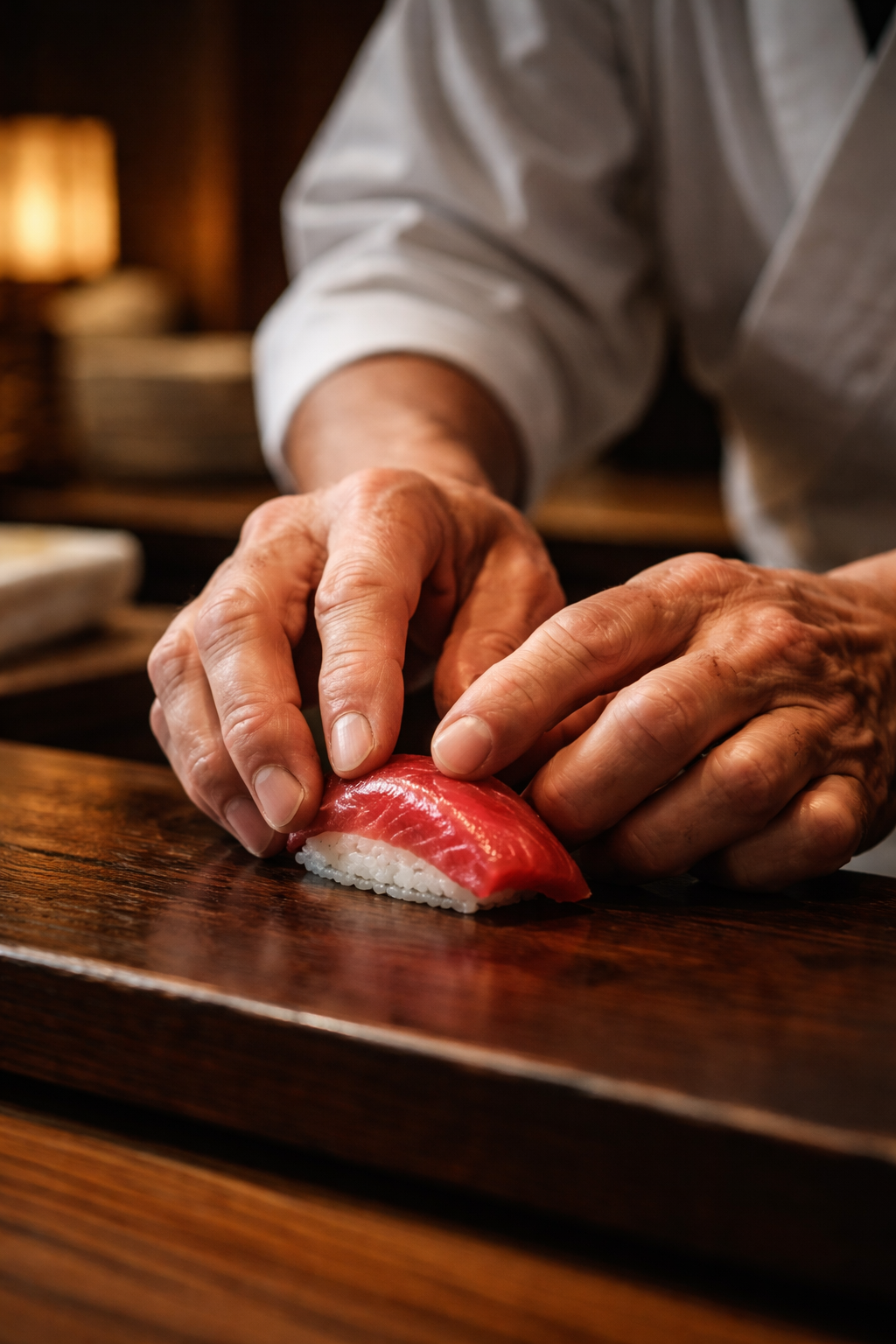
The word is difficult to translate precisely because English doesn't have a clean equivalent. "Perfectionism" is close but carries negative connotations — obsessiveness, anxiety, paralysis. "Craftsmanship" captures the skill but misses the philosophical commitment. "Attention to detail" is too small. Kodawari is all of these and something more: it is a stance toward quality — a decision, made once and maintained forever, that certain things are worth doing completely or not at all.
What Kodawari Actually Means
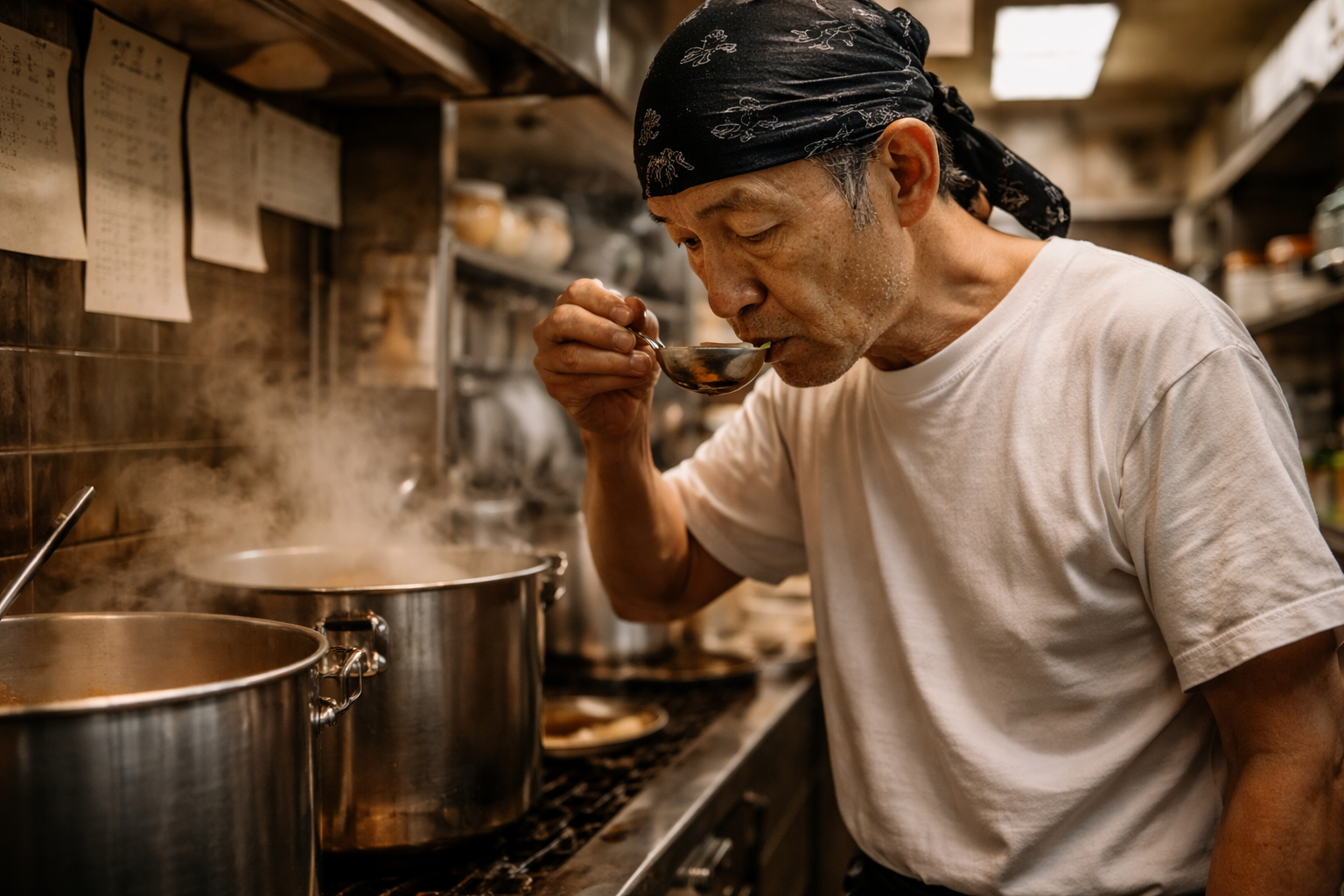
The word comes from the verb kodawaru (こだわる), which originally meant to be caught on something — to be stuck, to be fixated. In modern Japanese usage, it has been reclaimed as a positive term: to be productively fixated on quality. When a Japanese ramen chef says he has kodawari about his broth, he means he has spent years — sometimes decades — refining a single recipe to a standard only he fully understands and only he can measure. The broth takes eighteen hours to prepare. He adjusts it daily based on the season, the temperature, the water hardness. He has opinions about each ingredient that most food scientists would find excessive.
This is not unusual in Japan. It is expected.
"Kodawari is the relentless pursuit of perfection and attention to detail that is evident in every corner of Japanese life."
Japan Trends, 2026
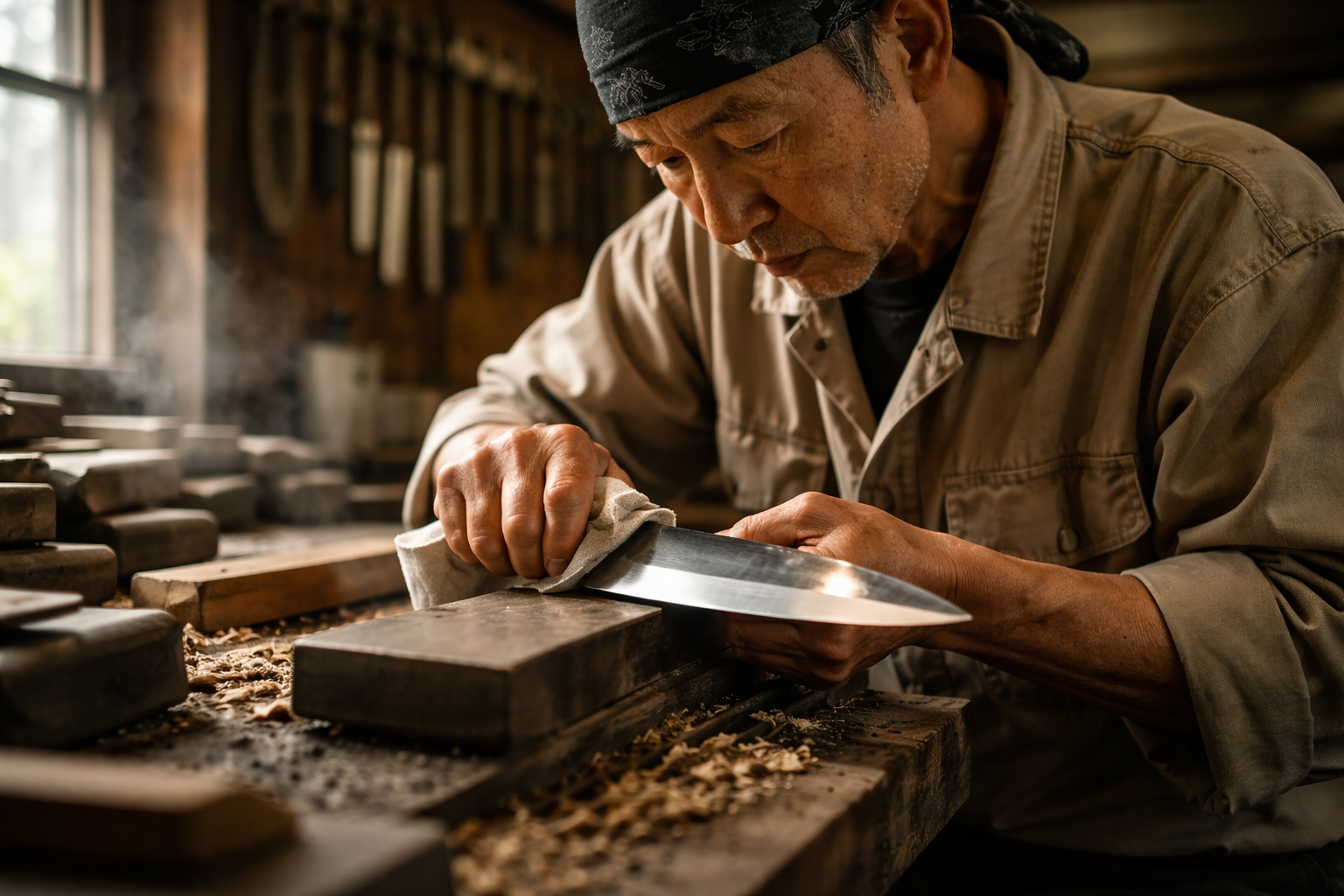
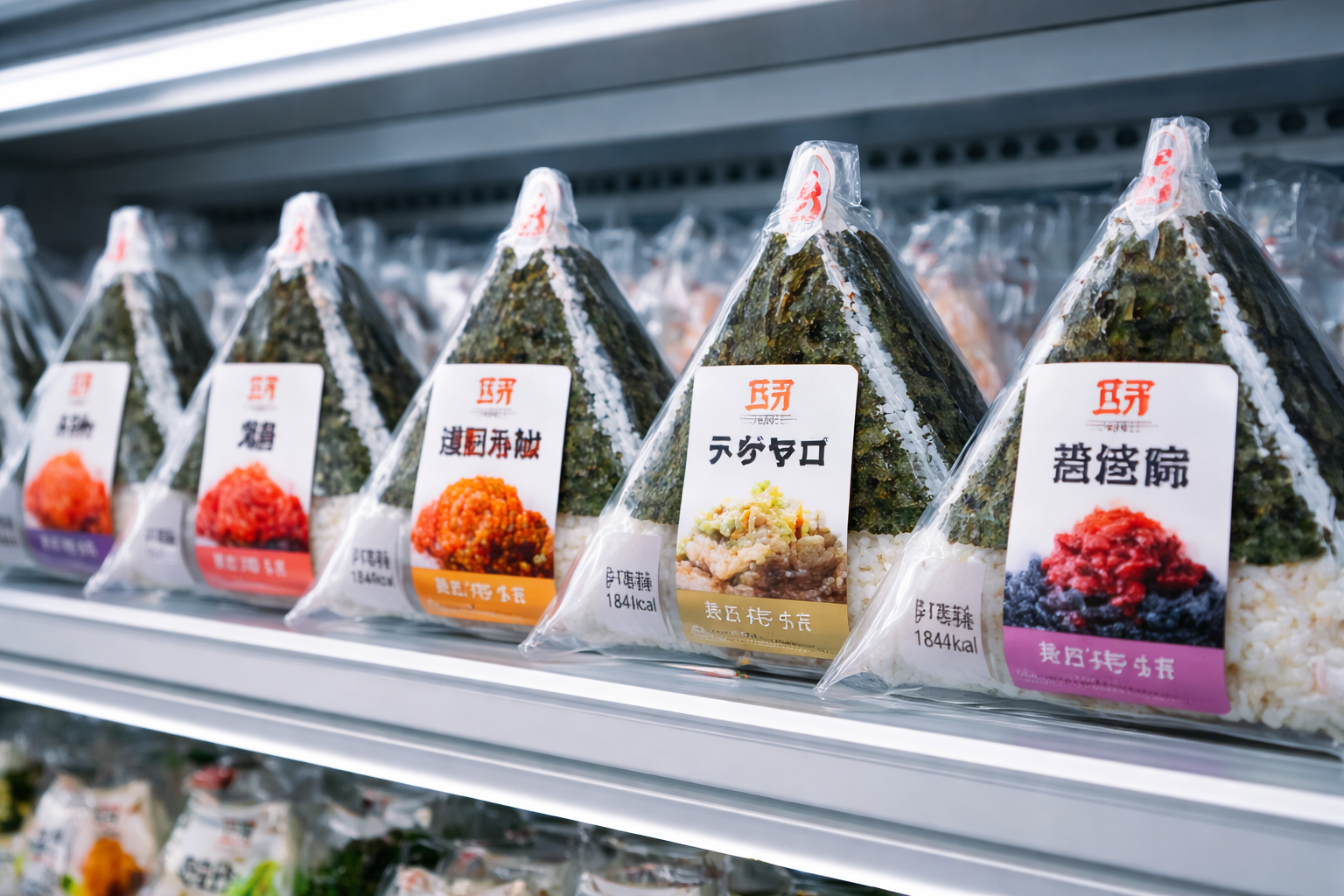
Kodawari operates at every scale. A grandmother's miso soup recipe that has been refined over fifty years. A salaryman's insistence on folding his presentation materials a specific way. A convenience store — a konbini — that changes its onigiri filling formula seasonally to match what tastes best at that temperature. A sake brewer who tastes his product daily for thirty years, looking for a quality he cannot quite name but will know when he finds it.
In all of these cases, the commitment is to a standard that exists primarily in the mind of the person doing it. That is what makes kodawari philosophically distinct: it is not about meeting external standards. It is about meeting your own — and refusing to lower them.
Kodawari in the Real World: Six Examples
Why Kodawari Is Different From Western Perfectionism
In most Western professional cultures, perfectionism is treated with ambivalence at best. It is acknowledged as a driver of quality while also being flagged as a source of anxiety, inefficiency, and burnout. The acceptable alternative — "good enough" — is not just tolerated but frequently celebrated. "Done is better than perfect." "Ship it." "Iterate later."
Kodawari does not recognize this trade-off. It does not experience quality and efficiency as opposites. And crucially — this is the part that most Western analyses of Japanese work culture miss — kodawari is not primarily about the outcome. It is about the relationship between the maker and the thing being made.
The difference is not just psychological — it is philosophical. Kodawari is rooted in a Japanese aesthetic tradition that values the process as much as the product. A sushi chef who has spent forty years refining his rice technique is not simply trying to make good sushi. He is engaged in a lifelong conversation with his craft. The sushi is the occasion for that conversation. It is not the point.
This is why kodawari professionals are almost never burned out in the conventional sense. The Western perfectionist is exhausted by the gap between what they produce and what they want to produce. The kodawari practitioner finds energy in that same gap — it is the reason to come back tomorrow.
Kodawari and the "One District, One Product" Economy
Japan's regional production culture — where specific towns or districts are renowned for specific products made in a specific way — is directly linked to kodawari. Sakai for kitchen knives. Arita for porcelain. Kyoto for traditional textiles. Kaga for lacquerware. Bizen for pottery.
In each of these cases, the regional production tradition is maintained by artisans whose relationship to their craft is explicitly kodawari-driven. The Arita porcelain maker does not simply produce porcelain — she makes Arita porcelain, which means she makes it the way Arita porcelain is made, which is a body of knowledge that has been accumulated and refined across generations. Her kodawari is in dialogue with centuries of accumulated craft knowledge. She is not simply trying to make good porcelain. She is trying to be worthy of the tradition she has inherited.
This is why Japanese regional products — when they are authentic — are almost always among the finest examples of their kind in the world. Kodawari, practiced at a community level across generations, produces an accumulation of quality that no other approach can replicate.
How Kodawari Is Going Global
The concept of kodawari has been traveling slowly into global business and creative culture for decades, usually without the word attached. The craft beer movement — with its insistence on specific hop varieties, fermentation temperatures, and flavor profiles that most drinkers cannot distinguish — is essentially Western kodawari. The specialty coffee movement. The slow food movement. The artisan bread culture. The mechanical keyboard community. The vinyl record revival.
All of these phenomena share the same structural feature: a community of practitioners who have decided that a specific thing is worth doing properly, and who are willing to invest significant time, money, and attention in the pursuit of a quality standard that most people would consider excessive.
In 2026, this cultural current is accelerating — partly as a response to the perceived disposability of AI-generated content and algorithmically optimized everything. When the default quality of most things is "adequate and instant," the human insistence on excellence becomes conspicuous and valuable. Kodawari — the Japanese version of this insistence — is increasingly being named as a model, by designers, chefs, product developers, and entrepreneurs who want a word for the commitment they feel but cannot articulate in English.
"In a world of algorithmic adequacy, kodawari is the most radical act available."
NETOKYO
How to Apply Kodawari in Your Own Life
Kodawari is not reserved for sushi masters or knife makers. It can be applied at any scale, in any domain. The question it asks is simple: What is the one thing, in this area of your life, that you are unwilling to compromise on?
The Word the World Needs
English does not have kodawari. It has a thousand phrases that approximate it — "attention to detail," "craftsmanship," "dedication to quality," "going the extra mile" — but none of them carry the weight, the philosophical precision, or the cultural authority of the Japanese word. They describe behavior. Kodawari describes a worldview.
That gap matters. Language shapes thought, and the absence of a word for something can make that thing harder to articulate, harder to value, harder to protect when efficiency demands compromise. Japanese culture has been protecting kodawari for centuries precisely because it has a word for it — a word that carries dignity, that commands respect, that makes the commitment legible.
The global spread of kodawari — as a concept, even without the word — suggests that this is something humans need: a name for the refusal to accept less than what is actually possible. A name for the conviction that some things are worth doing properly.
Jiro Ono is in his nineties. He still goes to the restaurant. He still adjusts the rice. He still has not made a perfect piece of sushi.
He will be back tomorrow.