Matcha: The 900-Year Japanese Tea Ceremony Ritual Taking Over the World
 NETOKYO
Matcha: The 900-Year Japanese Tea Ceremony Ritual Taking Over the World
By NETOKYO Editorial | June 4, 2026 | 12 min read
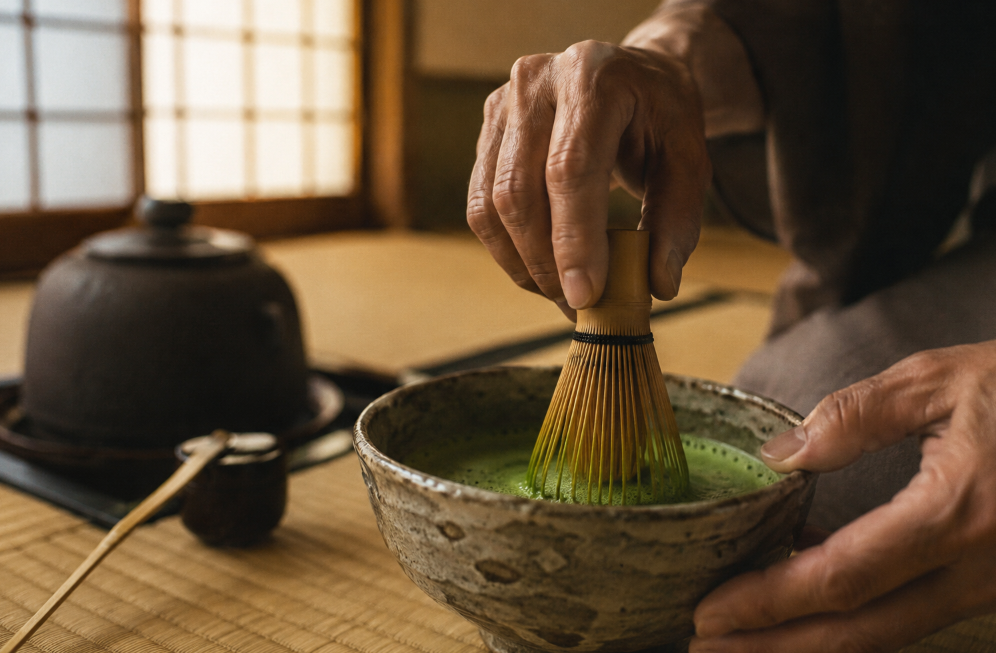
On a gray November morning in 1591, one of the most powerful men in Japan knelt alone in a small room the size of a parking space, heated a clay pot of water over charcoal, and scooped brilliant green powder into a rough ceramic bowl. He whisked it with a split-bamboo brush, watched the foam rise, and drank. Then Sen no Rikyu — the man who had defined the Japanese tea ceremony for an entire generation, who had whispered strategy into the ear of warlords, who had built an empire of aesthetics powerful enough to terrify a shogun — waited for the soldiers to come. He had been ordered to die. He was ready. His tea bowl, he reportedly noted, was perfect for a last cup and nothing else.
Rikyu's death is the hinge point that separates matcha as a drink from matcha as a philosophy. More than 900 years of Japanese history — from Zen monks meditating in mountain temples to samurai lords conducting tea ceremonies before battle, from the spare tatami rooms of Kyoto to the pastel-colored cafés of Manhattan and Seoul — flows toward and away from that single morning. And right now, in 2026, the global matcha market has crossed $4.6 billion, TikTok serves up matcha latte tutorials to 107% more viewers than just a year ago, and a generation of young people who have never heard of ichigo ichie is nevertheless reaching, instinctively, for the same bowl of green powder the monks discovered in the 12th century.
This is not a story about a trendy drink. This is a story about what happens when a culture turns the act of making tea into an entire way of living — and why the rest of the world keeps finding its way back to the same cup.
What Is Matcha? The Word, the Leaf, and the Powder
Not all green powders are matcha. This is the first thing that gets lost in the age of matcha lattes, matcha KitKats, and matcha-flavored everything. True matcha begins three to four weeks before harvest when farmers cover the tea plants in shade cloth, blocking 80–90% of sunlight. Deprived of light, the plant responds the way any organism does under threat: it overproduces. It floods its leaves with chlorophyll — which is why ceremonial matcha is that particular shade of deep, almost electric green. More urgently, it produces enormous quantities of L-theanine, an amino acid that, as the Zen monks who pioneered this practice somehow figured out nine centuries ago, induces a state of calm, focused alertness unlike anything else in the natural world.
After harvest, the leaves are steamed immediately to prevent oxidation, dried, and then de-stemmed and de-veined to produce tencha. Only then does the slow work begin: stone-grinding the tencha into powder at the rate of roughly 30 grams per hour per mill. One standard tin of matcha — the size of a small spice jar — represents hours of mill time, weeks of careful agriculture, and a direct line back to the Tang dynasty monasteries of 12th-century China.
The two categories you need to know: ceremonial grade matcha is made from the first harvest (first flush) of the youngest, most shaded leaves — bright green, smooth, naturally sweet, with no bitterness. This is what you whisk and drink straight with water, as tea masters have done for centuries. Culinary grade matcha is coarser, made from later harvests, and designed to hold its flavor when mixed with milk, sugar, or baked into food. The distinction matters more than most retailers will tell you.
From Chinese Monks to Japanese Masters: 900 Years of Matcha History
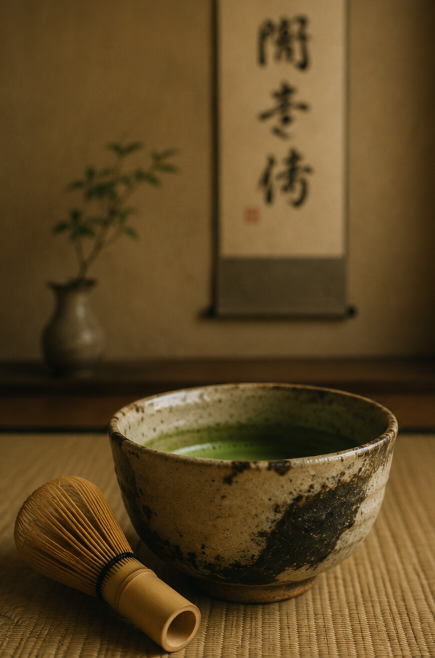
The year 815 CE. Emperor Saga is traveling through the province of Omi when he stops near the village of Karasaki. A Buddhist monk named Eichu — who had studied in Tang dynasty China — steps forward and serves the emperor tea. It is the first recorded instance of tea being offered to Japanese royalty. Emperor Saga was reportedly delighted enough that he ordered tea gardens planted in five provinces and commanded the cultivation of tea near the capital. These early efforts produced steamed, dried cakes of tea dissolved in hot water — not yet matcha, but the beginning of something.
For two centuries, tea in Japan remained a curiosity of the imperial court and Buddhist monasteries. Then, in 1191, a monk named Myoan Eisai returned from his second trip to China carrying two things: Chan Buddhist teachings and the specific technique of grinding powdered tea, whisking it with hot water, and drinking it in a single bowl. He planted tea seeds at Hakata (modern Fukuoka) and wrote Kissa Yojoki — "How to Stay Healthy by Drinking Tea" — the first Japanese book on tea. Eisai promoted matcha not as a ritual but as medicine, claiming it could cure lethargy, poor digestion, and "the five organs." It was quackery by modern standards and profoundly correct by accident: he had identified something real about the plant's relationship to the body, even if he couldn't name L-theanine or EGCG.
What followed over the next three centuries was a gradual transformation from medicine to ritual, from monk's practice to warrior's code. The Kamakura period (1185–1333) saw samurai adopt tea drinking from the Buddhist monasteries. Tea competitions called tōcha emerged, where participants competed to identify the origin of different teas — a sort of aristocratic wine-tasting game that could involve dozens of different bowls and considerable wagering. Tea became a status symbol, then a political instrument, then something more dangerous: a space where the rigid hierarchies of feudal Japan could be, within four tatami walls, suspended.
"Tea began as a medicine and grew into a beverage. In the 15th century it entered the realm of poetry — in the 16th century it became a religion."
— Kakuzo Okakura, The Book of Tea, 1906
By the 15th century, shogun Ashikaga Yoshimasa had retreated from political life to his famous Silver Pavilion in Kyoto and transformed tea drinking into a contemplative art. Under his patronage, Murata Juko (also known as Murata Shuko) developed the aesthetic of wabi-cha — literally "poverty tea" — a radical departure from the glittering, Chinese-artifact-filled tea gatherings of the aristocracy. Juko replaced golden screens and imported porcelain with plain walls, rough-hewn wood, and deliberately imperfect Korean and Japanese ceramics. The point was not austerity for its own sake but something subtler: the recognition that beauty lives in imperfection, in the crack in the glaze, in the ceremony itself rather than the objects surrounding it. This is the aesthetic spirit that runs directly through Japanese culture and finds its fullest contemporary expression in what we call wabi-sabi — a concept deeply intertwined with how the tea ceremony understands beauty and transience.
The Tea Room as Political Theater
By the late 16th century, a single tea gathering between rival daimyo could function as a peace negotiation, a business agreement, a diplomatic reconnaissance, and a psychological competition — all at once, and without a word spoken about any of it. The act of serving tea was itself a language. How quickly you whisked, which bowl you chose, which scroll hung in the alcove, which flower arrangement occupied the tokonoma — all of it communicated. Warlord Oda Nobunaga understood this so well that he collected rare tea objects (meibutsu) the way other rulers collected territory, and he distributed them to loyal generals as war prizes. A prized tea bowl, in his calculus, was worth the same as a castle.
Sen no Rikyu and the Politics of Tea — Japan's Greatest Unsolved Mystery
No single person did more to shape the Japanese tea ceremony than Sen no Rikyu (1522–1591), and no single person's death left more questions unanswered. Born into a merchant family in Sakai (near present-day Osaka), Rikyu studied tea under the masters of his era and eventually came to serve the two most powerful warlords in Japanese history: Oda Nobunaga, then Toyotomi Hideyoshi. By the 1580s, he was not merely a tea master — he was a political counselor, a cultural arbiter, and by some accounts the second most powerful man in Japan. Foreign visitors reportedly said that to understand Japan, you had to first understand Rikyu.
His innovations transformed every aspect of the ceremony. He miniaturized the tea room to as little as two tatami mats — a radical compression that forced participants into an intimacy where social rank became physically impossible to maintain. More provocatively, he introduced the nijiri-guchi: a doorway so small, measuring approximately 60 centimeters square, that everyone who entered — warlord, merchant, monk — had to remove their swords, get on their hands and knees, and bow their head to pass through. A samurai could not enter Rikyu's tea room armed. In a culture where the sword was the literal and symbolic marker of status, this was not a small gesture. It was an architectural argument about human equality made in carved wood and plaster.
"The tea room was an oasis in the dreary waste of existence where weary traveler could meet to drink from the common spring of art-appreciation. The ceremony was an improvised drama whose plot was woven about the tea, the flowers, and the paintings. Not a color to disturb the tone of the room, not a sound to mar the rhythm of things."
— Kakuzo Okakura, The Book of Tea
His relationship with Toyotomi Hideyoshi — the peasant-born military genius who unified Japan — was the defining and ultimately fatal tension of Rikyu's life. Hideyoshi craved the cultural legitimacy that Rikyu's world provided. He commissioned tea ceremonies, collected meibutsu obsessively, and organized the famous Kitano Grand Tea Ceremony of 1587, which was open to every class of person regardless of rank or wealth — a democratizing spectacle that borrowed directly from Rikyu's philosophy while spectacularly missing its spirit. Rikyu shaped the event and watched Hideyoshi perform it.
Then, in the winter of 1591, something broke between them. The exact reason remains, in the words of historians, "one of the greatest mysteries of Japanese history." No contemporaneous document records the specific offense. Theories vary: Rikyu placed a wooden statue of himself in a gatehouse that Hideyoshi had to pass beneath, which could be read as deliberate humiliation. He may have involved himself in political dealings outside his role. He may have been caught in a corruption scheme related to the sale of tea objects. He may simply have become too independent, too powerful, too able to embarrass the ruler who needed him.
Whatever the reason, in February 1591, Hideyoshi ordered Rikyu to leave Kyoto in disgrace. Three weeks later, he ordered him to die. On April 21, 1591, Sen no Rikyu reportedly performed one final tea ceremony, served tea to his guests, presented each of them with a piece of his utensils as farewell gifts, and then committed ritual suicide. The tea bowl he used, according to legend, he smashed afterward so that "no lips so base as those that condemned him" would ever drink from it again.
His three schools — Urasenke, Omotesenke, and Mushakojisenke — survive to this day, still teaching his methods, still practicing in rooms built to his dimensions, the philosophical descendants of a man who turned the act of making tea into the most refined and the most subversive act available to a person in feudal Japan. If you want to understand why the concept of kodawari — the relentless, obsessive pursuit of perfection — runs so deep in Japanese culture, the tea ceremony is where you look first.
Chado: The Way of Tea as a Complete Philosophy of Life
The word chado (茶道) — or sado — combines cha (tea) and do (道), the same do as in judo, kendo, aikido. It means "the way of tea," and the inclusion of that suffix is doing enormous philosophical work. In Japanese culture, a do is not a skill. It is a path of transformation, a discipline through which the practitioner attempts to cultivate themselves, not merely their technique. You do not simply become good at making tea; you attempt, through the practice of making tea, to become a better human being.
The four principles that Rikyu codified as the foundation of chado are:
- Wa (和) — Harmony: Between host and guest, between humans and nature, between the season and the tea room. Nothing in a properly conducted ceremony is accidental — the scroll, the flower, the sound of the water, the shape of the bowl — all chosen in relation to one another and to the moment of the year.
- Kei (敬) — Respect: Genuine attention given to every person and object in the space. The tea bowl is handled with the same care you would give something precious, because the practice teaches that everything is precious. Guests bow. Hosts bow. The tea scoop is laid down with intention.
- Sei (清) — Purity: Not just physical cleanliness — though the pre-ceremony cleaning of every utensil is meticulous and ritualistic — but a mental and spiritual clearing. You enter the tea room having left, as much as possible, the ordinary world behind.
- Jaku (寂) — Tranquility: The deep quietness that emerges from practicing the first three. Not performed calm, not Instagram stillness — actual interior quiet, the kind that takes years of practice to locate.
Woven through all four principles is the concept of ichigo ichie (一期一会): "one time, one meeting." Every tea gathering, Rikyu taught, is unique and unrepeatable. The same people will never gather in the same room with the same light, the same season, the same mood, ever again. This sounds like a philosophical platitude until you actually sit in a tatami tea room, hold a bowl that a craftsperson spent weeks making by hand, and feel the weight of it — the slight asymmetry that makes it warm to hold in exactly this way, in exactly this light, at exactly this temperature of the air — and something in the abstraction becomes suddenly, uncomfortably real.
This philosophy connects directly to the quieter Japanese concept explored in our guide to shinrin-yoku (forest bathing) — both practices are fundamentally about slowing down enough to actually inhabit the present moment, using a physical ritual to bypass the mind's habit of projecting backward and forward.
The Science Behind the Serenity: Why Matcha Works the Way It Does
The Zen monks who began using powdered tea in their meditation practice during the 12th century had no concept of neurotransmitters, amino acids, or alpha brain waves. They knew only that drinking matcha before long meditation sessions helped them maintain focused awareness without the agitation that accompanies ordinary stimulants. They were right, and the reason is now understood with considerable precision.
Matcha contains two psychoactive compounds that, in most caffeinated beverages, work against each other. The first is caffeine — which you know. The second is L-theanine, an amino acid found almost exclusively in tea plants that does something remarkable: it crosses the blood-brain barrier and stimulates the production of alpha brain waves, the same waves associated with meditative flow states, creative focus, and REM sleep. In ordinary coffee or steeped green tea, you get caffeine without enough L-theanine to counterbalance it, and the result is the familiar jitter-crash cycle. In matcha, the ratio is different.
A standard cup of matcha contains 25–35mg of L-theanine — up to five times more than a comparable serving of steeped green tea. The shade-growing process that forces the tea plant to overproduce chlorophyll also forces it to retain L-theanine rather than converting it into catechins as it does under normal sunlight. The monks covered the plants with shade cloth without knowing why it worked. The effect is a neurological state that practitioners describe as "alert calm" — engaged enough to focus, settled enough not to be reactive. The monks called it a gift from the plant. The neurologists call it alpha wave induction. They are describing the same thing.
Matcha vs. Coffee: A Chemical Comparison
Standard coffee (8oz): 95mg caffeine, ~4mg L-theanine. Net effect: rapid stimulation followed by cortisol spike, potential anxiety, energy crash at 2–3 hours.
Ceremonial matcha (2g/80ml): 34–70mg caffeine, 25–35mg L-theanine. Net effect: sustained, even energy across 4–6 hours, no cortisol spike, reduced anxiety response, alpha wave enhancement. The caffeine hits more slowly because it is bound to the plant fiber you are consuming — you drink the entire leaf, not an infusion of it.
This is not marketing copy. Multiple peer-reviewed studies have confirmed that the L-theanine/caffeine combination in matcha produces measurably different cognitive effects than caffeine alone — including improved sustained attention, better accuracy on cognitive tasks, and reduced self-reported stress.
Beyond L-theanine, matcha's nutritional profile is dramatically different from any steeped tea. Because you consume the entire ground leaf rather than an infusion, you receive the full complement of the leaf's compounds. This includes EGCG (epigallocatechin gallate), a catechin antioxidant that has been studied extensively for its potential role in metabolic health and cellular protection. Research suggests matcha contains up to 137 times more EGCG than conventional steeped green tea. It also contains chlorophyll at concentrations high enough to be visible to the naked eye — that vivid green color is biological information about what you are drinking.
How to Experience Authentic Matcha — From the Tea Room to Your Kitchen
If you have the opportunity to experience a formal Japanese tea ceremony — chaji (full ceremony, up to four hours) or chakai (informal gathering, one to two hours) — do it once before you read another matcha tutorial. It will change what the tutorials mean. Formal ceremonies are available to visitors in Kyoto, particularly through the Urasenke and Omotesenke schools, as well as at many traditional inns (ryokan) and cultural centers throughout Japan.
For the rest of us, the home preparation of matcha is a practice in its own right — abbreviated, yes, and absent the full ritual architecture of a tea room, but not without meaning. Rikyu's philosophy was always about the quality of attention brought to the act, not the perfection of the setting.
Jade Leaf Matcha Traditional Starter Set
How to Experience Authentic Matcha at Home — Step by Step
- Start with water temperature. Boiling water is the most common mistake. Matcha should be prepared at 70–80°C (158–176°F). If you don't have a thermometer, boil the water and let it sit for 3–4 minutes before using. Too-hot water makes matcha bitter and destroys the L-theanine.
- Sift the matcha first. Use a small sieve to push 1.5–2g of matcha through into the bowl. Matcha clumps easily, and unsifted powder produces lumpy, unwhisked tea. Sifting takes 10 seconds and changes everything.
- Add a small amount of water first. Pour roughly 30ml (2 tablespoons) of hot water onto the sifted powder and stir gently with the chasen until you have a smooth paste. No dry clumps.
- Add the remaining water and whisk. Pour another 60–70ml of hot water. Hold the bowl steady with your non-dominant hand. Using the chasen, whisk vigorously in a W or M motion — not a circular stir — until a fine, even foam appears on the surface. This takes 15–20 seconds of actual effort.
- Drink immediately. Matcha begins losing its foam and its vitality within minutes. Turn the bowl slightly clockwise (traditionally three times, a gesture of respect) before lifting it to drink. Drink from the front of the bowl.
- Clean the chasen immediately. Rinse the bamboo whisk under warm water right after use. Never scrub it. Store it on a chasen holder (kusenaoshi) or upright in a cup so the tines hold their shape. Bamboo molds if left wet.
Once you have the technique, the quality of the matcha becomes the limiting factor. This is where most home practitioners shortchange themselves. A culinary-grade powder sold for baking cannot produce the smooth, naturally sweet bowl of tea that makes the experience revelatory. Ceremonial grade — specifically, first-harvest ceremonial grade from authenticated Japanese production — is non-negotiable for drinking straight.
Jade Leaf Matcha Organic Ceremonial Grade Powder
The Modern Matcha Boom: TikTok, $4.6 Billion, and What Gets Lost in the Latte
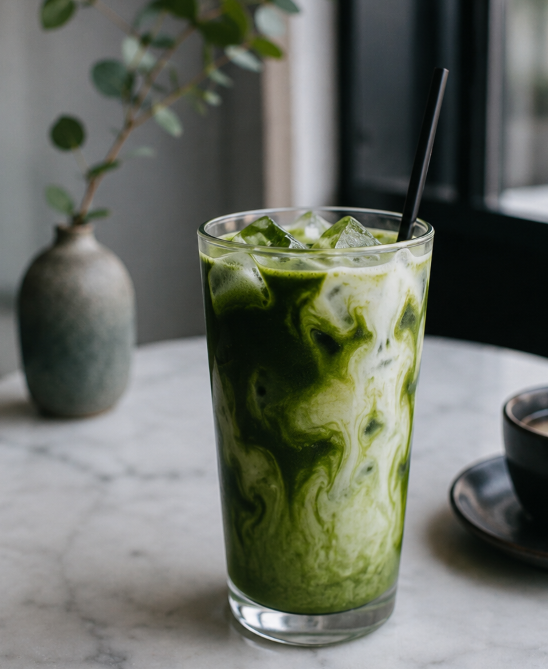
In January 2026, a press release from a market research firm announced that the global matcha industry was on track to reach $5 billion by 2031. Matcha mentions on social media had grown 107% year-over-year. Menu items featuring matcha had increased 30% in a single year at restaurants and cafés across North America and Europe. The same week, a video of someone making a "sweet cream oat milk matcha latte" was getting 12 million views on TikTok. The comments were overwhelmingly positive. Nobody in the comments mentioned Rikyu.
This is not a critique of people who enjoy matcha lattes. The drink is genuinely delicious and demonstrably good for you. The accessibility of the modern matcha boom has introduced millions of people to a plant and a tradition they would never have encountered otherwise. Some of them will become curious. Some of them will buy a chasen and start reading about the ceremony. Some of them will visit Kyoto and book a proper chaji experience and come out of it changed.
But something is worth naming. The tea ceremony was designed, structurally and philosophically, around the removal of speed. The small room, the low ceiling, the two-hour preparation for a thirty-second drink — all of it was engineered to force a particular relationship with time. When you make matcha on TikTok in ninety seconds with a frother and a flavored syrup, you are extracting the visual and the flavor while bypassing the form. This is not inherently wrong. But it does mean that what you are experiencing is not the same thing the monks were experiencing, or what Rikyu was teaching, or what the practitioners at Urasenke still teach today.
The irony the 21st century has arrived at is this: the very demographic most drawn to matcha — young, health-conscious, often anxious, often seeking something to slow them down — is exactly the demographic for whom the full ceremony was designed. The slow preparation is not a quaint historical artifact. It is the medicine.
The matcha boom is also producing geographic surprises. Japan still accounts for 22% of new matcha food and beverage launches globally, but the fastest-growing markets are not in Asia or North America — they are in Turkey, Germany, South Korea, and Vietnam. The bitter, ceremonial beverage of 12th-century Japanese Buddhist monks is becoming, simultaneously, a Vietnamese street drink, a German wellness staple, and a Turkish café trend. None of these audiences know much about Rikyu. All of them are responding to something in the substance itself.
The question worth sitting with is: at what point does a tradition become a product, and what happens to the people who might have needed the tradition? The tea ceremony survived the Meiji period's forced modernization, two world wars, the occupation, and the economic miracle that turned Japan into a consumer society virtually overnight. It survived because the practice itself — the actual sitting, the actual whisking, the actual waiting — continued to produce in people the thing they could not get anywhere else. The tradition is sturdy enough to survive being reduced to a latte. Whether the latte leads anyone back to the tradition is a question the next decade will answer.
Where to Find Authentic Matcha Experiences in 2026
If you want to experience the tea ceremony properly — not the two-minute tourist version, but the real thing — these are the categories of experience worth seeking:
- Kyoto, Japan: The Urasenke school (裏千家) offers formal introduction courses for international visitors. The Omotesenke school (表千家) similarly accepts students for short-term study. Many traditional machiya townhouses have been converted into tea rooms offering afternoon chakai.
- Uji, Kyoto Prefecture: The single most important matcha-growing region in Japan. Visiting in late April or May means watching the harvest. Several production facilities offer tours of the stone-grinding process. The Taiho-an tea house in Uji overlooks the river and offers affordable chakai to walk-in visitors.
- Major international cities: Look for tea schools affiliated with Urasenke, Omotesenke, or Mushakojisenke in cities like New York, London, and San Francisco. These are the authentic lineage institutions — not the generic "tea ceremony experience" offered by tourism companies.
Jade Leaf Matcha Complete Whisk Set
The Anatomy of a Tea Ceremony: What Actually Happens in the Room
Most accounts of the tea ceremony describe its meaning without describing what it looks like. The gap between "four hours of ritualized silence" and what actually unfolds inside that time is where most people's understanding stops. So: what does a full-length tea ceremony — a chaji — actually consist of?
It begins before guests arrive. The host has been working for hours, sometimes days. The tea room (chashitsu) has been swept, the garden path (roji) dampened with water to suggest dew-covered moss. The alcove (tokonoma) holds a hanging scroll — typically a piece of calligraphy selected for its relevance to the season or the guests — and a single seasonal flower arrangement. Nothing in a properly prepared tea room is accidental. The scroll, the flower, the shape of the charcoal fire, the temperature of the water: each is a decision that took years of study to be able to make.
Guests arrive and wait in an exterior garden shelter (machiai), typically drinking a small cup of hot water served by the host's assistant. Then, at an appointed signal — traditionally a gong struck a specific number of times — they move through the garden along the stepping-stone path (roji, meaning "dewy ground"). The path is deliberately irregular, deliberate enough to make rushing impossible. Walking the roji, in Rikyu's conception, is the transitional space between the ordinary world and the world of the tea room — a geographic metaphor for the psychological shift the ceremony requires.
They pass through the nijiri-guchi — the small crawl-through entrance — and enter the tea room. In a proper chaji, the first half is occupied by a full meal (kaiseki): small, exquisitely prepared dishes served in sequence, each reflecting the season. Sake is offered. Then the guests retreat to the garden while the host prepares for the tea service itself, building a fresh charcoal fire and hanging new water. When the guests return, they find the scroll has sometimes been replaced with a flower in a simple vase. The room has been transformed.
The formal tea service divides into two parts: koicha (thick tea) and usucha (thin tea). Koicha is the heart of the ceremony — a dense, paste-like preparation made with significantly more matcha than usual, shared from a single bowl among multiple guests. It requires years of practice to prepare properly; the host must whisk it without foam, smoothly, at exactly the right consistency. Guests rotate the bowl before drinking (to avoid placing their lips on the "front"), drink, then clean the rim with a kaishi paper, and pass it to the next guest.
After koicha comes usucha — the lighter, foamier preparation that most people associate with matcha. By this point, conversation has become easier. Small wagashi sweets are served before each round of tea. The utensils — tea scoop, whisk, tea container — are examined and discussed. Guests ask questions; the host answers. The objects, their provenance, the craftsperson who made them: all of this becomes part of the conversation, the slow discovery that happens when people have nowhere else to be.
The entire event ends when the host places the tea utensils back in their proper positions. The guests bow. They exit through the garden. In formal tradition, they do not look back.
The Objects and What They Mean
Every object in the tea ceremony carries weight — sometimes literal antique weight, sometimes symbolic weight. Understanding what each piece does changes what you see when you hold one:
- Chawan (茶碗) — Tea Bowl: The most important object in the ceremony, and often the most valuable. The greatest tea bowls are hand-thrown, deliberately irregular, and show the marks of the maker's hands. Raku ware — developed specifically for the tea ceremony by the potter Chojiro under Rikyu's direction in the late 16th century — remains among the most prized: low-fired, hand-formed, porous, and warm to hold. A single antique Raku bowl can sell at auction for millions of dollars. What makes a great chawan is not obvious — it is a conversation between the bowl's shape, weight, foot ring, glaze, and the feel of it against the palm when filled with hot tea.
- Chasen (茶筅) — Tea Whisk: Carved from a single piece of bamboo, split into 80 or more fine tines at the top, the chasen is a precision instrument. A new chasen is softened in warm water before its first use. It lasts, with proper care, approximately three to six months of regular use, after which the tines begin to break. Tea masters traditionally retire their chashens in a ceremony called chasen kuyo — a memorial service for the whisk, conducted with the same care given to any other significant ending.
- Chashaku (茶杓) — Tea Scoop: A simple curved bamboo scoop used to transfer matcha from the container to the bowl. The greatest chashaku were carved by tea masters themselves — Rikyu carved hundreds, and the ones that survive are considered cultural treasures. Their value is not in the material (cheap bamboo) but in the hand that shaped them and the ceremonies they participated in.
- Natsume / Chaire (棗 / 茶入) — Tea Container: The lacquered wooden natsume (for usucha) and the ceramic chaire (for koicha) hold the matcha during the ceremony. These are among the most personal of the host's objects — often received as gifts, often associated with specific teachers or occasions.
- Kama (釜) — Iron Kettle: The heart of the tea room's sound world. A properly made tea kettle hisses softly over the charcoal fire in a sound described by practitioners as matsukaze — the sound of wind through pine trees. The kettle's sound is not incidental; it is part of the atmosphere the host creates.
"The tea bowl holds the history of hands. Not just the potter's hands — though those are there in every curve — but every hand that has held it before yours. The bowl in your hands has a biography."
— Contemporary tea master, Urasenke school, Kyoto
Where Matcha Comes From: The Landscape, the Labor, the Season
Matcha does not happen by accident. It requires a specific geography, a specific climate, a specific human intervention, and a specific relationship with time. Understanding where it comes from changes what it tastes like — not because the information alters the chemistry, but because the information alters what you pay attention to when you drink.
The Three Great Matcha Regions of Japan
Uji (宇治), Kyoto Prefecture is the most storied matcha-producing region in Japan — arguably in the world. Located south of Kyoto, Uji has been producing tea for over 800 years, its climate moderated by the morning mists that rise from the Uji River and cool the growing season. The first matcha produced here was cultivated specifically for the Ashikaga shogunate in the 14th century, and the region has never lost its association with the highest grades of ceremonial tea. The soil in Uji — volcanic, well-draining, rich in minerals leached from the surrounding mountains — produces a flavor profile that experienced matcha drinkers can distinguish from other origins: cleaner, more complex, with a sweetness that persists longer after the bowl is empty.
Nishio (西尾), Aichi Prefecture produces roughly half of Japan's total matcha output, making it the largest producing region by volume. Nishio's flat, clay-rich river delta land and warm, humid summers allow for high-yield cultivation, and its proximity to Nagoya made it historically accessible to commercial distribution. Nishio matcha tends toward a more robust flavor, slightly earthier than Uji, with a pronounced umami that works particularly well in culinary applications. The city has built its identity around matcha — there is a matcha museum, a dedicated research center, and more shade-covered tea fields visible from the train than in any other region of Japan.
Kagoshima (鹿児島) Prefecture, at the southern tip of Kyushu, is the youngest of the major producing regions and the one most associated with premium commercial production. Kagoshima's warm, subtropical climate allows for earlier harvests and multiple yields per year. The volcanic soil from Sakurajima — an active volcano visible from the tea fields — contributes mineral characteristics to the leaf that distinguish it from Uji or Nishio productions. Many premium brands, including internationally distributed ceremonial grades, source from Kagoshima's first flush.
The Shade-Growing Process: Engineering Flavor Through Stress
The process that transforms ordinary tea into matcha begins three to four weeks before harvest, when farmers erect shade structures — traditionally rice straw, now typically synthetic shade cloth — over the growing plants, blocking 70–90% of sunlight. This is not comfortable for the tea plant. Deprived of the light it needs to photosynthesize efficiently, the plant shifts its metabolic strategy: it begins overproducing chlorophyll (to capture every available photon) and retaining L-theanine (which it would normally convert into catechins via a sunlight-dependent process). The result of this plant-level emergency response is a leaf that is darker green than any naturally grown tea, more concentrated in L-theanine than any other source in the natural world, and paradoxically lower in the bitter tannins that characterize unshaded green tea.
After harvest — which must be timed precisely, typically in late April or early May in Uji and Nishio — the leaves are immediately steamed to prevent oxidation. Timing is critical: even a few hours of delay can change the flavor profile irreversibly. The steamed leaves are then dried and processed into aracha (raw tea), which is sorted to remove stems and veins, leaving only the flat leaf portions. This de-stemmed, de-veined leaf — now called tencha — is what will become matcha.
The stone-grinding stage is where time becomes the most legible ingredient. Traditional granite stone mills produce approximately 30 grams of matcha per hour — a rate that cannot be accelerated without generating heat that damages the delicate volatile compounds responsible for matcha's characteristic flavor. A 30-gram tin of high-quality ceremonial matcha represents roughly one hour of single-mill grinding time. Industrial grinding methods exist but are detectable in the final product: the particle size is less uniform, the flavor less clean. The most obsessive producers use mills that run only at night, when ambient temperature is lower and vibration from nearby activity is reduced.
The First Flush and Why It Matters
Tea plants produce multiple harvests per year, but they are not equal. The first flush — the first harvest of the growing season, taken from the youngest, most tender leaves at the top of the plant — is universally considered the finest. These leaves have accumulated nutrients through the winter dormancy, they respond most dramatically to the shade-growing process, and they have not yet been depleted by multiple cycles of growth and harvest. First-flush ceremonial matcha from Uji in a good year is as far from grocery-store green tea powder as fresh black truffle is from truffle-flavored potato chips. The difference is not subtle.
Second and third flush leaves are harder, more fibrous, higher in the astringent tannins that shade-growing was supposed to suppress. They are suitable for culinary grade production — where strong flavor can compete with other ingredients — but they are not what you want in a bowl of straight hot water. When a matcha label does not specify harvest, you are almost certainly getting second flush or blended production.
Matcha Around the World: How a Zen Ritual Became a Global Language
In 2026, you can drink ceremonial grade matcha prepared with a traditional chasen in a Japanese tea school in New York's Tribeca neighborhood, or in a converted warehouse in East London, or in a minimalist café in Seoul's Seongsu-dong district where the menu is trilingual and the queue is forty minutes long. You can also drink a matcha soft serve cone in a 7-Eleven in Bangkok, a matcha frappuccino variant in São Paulo, or a matcha-flavored kit kat in a duty-free shop in Frankfurt. Matcha has become, in the space of roughly twenty years, a truly global flavor and aesthetic — one of the fastest-moving cultural exports Japan has ever produced.
The trajectory matters. Matcha's first significant moment in the Western market came in the mid-2000s through the specialty health food channel — Japanese grocery stores in major coastal cities, followed by early adopter wellness brands targeting the same consumers who were buying cold-pressed juice and adaptogenic mushroom powders. The pitch was health: antioxidants, clean energy, L-theanine. The ceremony was an afterthought, or a marketing angle. The drink led, and the culture followed tentatively behind.
The second wave, beginning around 2018 and accelerating dramatically through the pandemic years, was driven by Instagram aesthetics. Matcha's particular green — vivid, saturated, photogenic against the neutrals of Scandinavian café interiors or Japanese minimalist dishware — became one of the defining colors of a certain visual register of social media. The matcha latte, served iced in a clear glass, was as much a visual object as a beverage. Cafés understood this and began treating matcha preparation as a form of content production, hiring baristas who could whisk a perfect bowl in fifteen seconds and plate it against a marble counter for the twelve-second video.
The third wave — the one we are in now — is more interesting. Social media matcha has created such broad awareness that a genuinely curious subculture has emerged around the ceremony, the sourcing, the terroir. Matcha specialty shops that carry single-origin first-flush teas and host monthly comparison tastings have opened in cities where, five years ago, finding any ceremonial grade at all required a specialty import store. YouTube channels dedicated to traditional matcha preparation have audiences in the millions. The Urasenke school's English-language outreach programs have seen waitlists grow substantially.
The Korean Matcha Moment
South Korea's relationship with matcha deserves particular attention. The country's café culture — arguably the most sophisticated and competitive in the world per capita, with more cafés per square kilometer in Seoul than in any other global city — has developed its own aesthetic around matcha that neither copies Japanese tradition nor entirely abandons it. Korean matcha preparation tends to be more innovative: layered with alternative milks in ways that create visual gradients, combined with local flavors like omija (five-flavor berry) or black sesame, presented in vessels that bridge contemporary Korean pottery with Japanese chawan aesthetics. The result is a tea culture that takes the plant seriously without treating the ceremony as a museum piece — exactly the kind of living adaptation that traditions require to survive.
What the Global Matcha Boom Has Done for Japanese Tea Farmers
The economic impact of the global matcha boom on Japanese tea agriculture is real and complicated. The good news: demand has revived a sector that was in serious decline. Japan's domestic tea consumption has been falling for decades as younger generations move toward coffee, energy drinks, and convenience beverages. The export boom in matcha has given premium producers — particularly the small-scale, single-origin farms of Uji and Nishio — a global market willing to pay significant premiums for authenticity, quality, and traceability. The "direct trade" model, borrowed from specialty coffee culture, has begun appearing in the matcha sector, with Western buyers visiting farms, building relationships with specific growers, and paying prices that allow those growers to maintain traditional quality practices.
The complicated news: the volume demand generated by the broader matcha market has created pressure to expand production faster than traditional agricultural practices allow. Some producers have compromised on shade duration, stone-grinding time, or leaf selection to meet orders. The consumer who buys the cheapest "ceremonial grade" they can find on Amazon is, with some frequency, purchasing marketing copy rather than an actual production standard — there is no regulated international certification for "ceremonial grade," and the term is legally meaningless outside Japan. The best protection for consumers is the same as for any agricultural product: specificity of origin, producer transparency, and price point. Genuinely high-quality first-harvest ceremonial matcha from a named Uji or Kagoshima source does not sell for $8 per 30-gram tin. If it does, it is not what the label implies.
Frequently Asked Questions About Matcha and the Japanese Tea Ceremony
What does matcha mean in Japanese?
Matcha (抹茶) combines matsu (抹) — meaning "to rub, grind, or pulverize" — and cha (茶) — meaning "tea." The literal translation is "ground tea" or "rubbed tea," distinguishing powdered leaf tea from all other preparations. The character 抹 specifically implies fine grinding, as opposed to rough crushing — acknowledging that the stone-grinding process is integral to what makes matcha what it is. Some older romanizations spell it "maccha," which more closely approximates the Japanese pronunciation: mah-chah, with a doubled consonant sound at the center.
What is the Japanese tea ceremony called, and what is its purpose?
The tea ceremony is known by three names: chanoyu (茶の湯, "hot water for tea"), chado or sado (茶道, "the way of tea"), and less formally, otemae (お点前, referring specifically to the procedure of preparing tea). Chanoyu tends to refer to the act; chado refers to the philosophical discipline. The purpose, as articulated by Sen no Rikyu and practiced by all three of his surviving schools, is simultaneously aesthetic, social, and spiritual: to create a space outside normal hierarchies where host and guest are genuinely present with each other, where the four principles of harmony, respect, purity, and tranquility can be embodied rather than merely described.
Why do Zen monks drink matcha before meditation?
The connection between matcha and Zen meditation predates any understanding of L-theanine by approximately 900 years. Monks who practiced long meditation sessions — sometimes lasting 12 hours or more — found that drinking powdered green tea helped them maintain focused alertness without the agitation or craving-distraction of hunger. We now understand why: matcha's L-theanine (25–35mg per cup, up to five times higher than steeped green tea) stimulates alpha brain waves — the same neural pattern associated with meditative and creative flow states — while the caffeine provides sustained physical alertness. The combination produces what practitioners describe as "alert calm" — the precise neurological state that long meditation requires. The shade-growing technique that concentrates L-theanine was, in effect, an accidental discovery by farmers who noticed that covered plants produced better-tasting, more effective tea.
What is the difference between ceremonial grade and culinary grade matcha?
Ceremonial grade matcha is produced from the first harvest (first flush) of the youngest leaves from the most carefully shaded plants, stone-ground at the slowest possible speed to prevent heat from degrading flavor and nutrients. The result is a powder that is intensely green, naturally sweet, smooth, and free of bitterness — designed to be drunk straight with hot water, as in the tea ceremony. Culinary grade is produced from later harvests of older leaves, often with more variation in processing. It is coarser, more astringent, and less vividly colored, but its stronger flavor holds up when competing with milk, sugar, or baking heat. Using culinary grade matcha in a straight bowl of hot water produces an unpleasant, bitter result. Using ceremonial grade for baking is an expensive waste of nuance. The categories are real and matter.
Where can I buy authentic ceremonial grade matcha — and how do I know if it is real?
Authentic Japanese ceremonial grade matcha will specify both the region of origin (Uji in Kyoto, Nishio in Aichi, and Kagoshima are the three primary producing regions) and the harvest — look for "first harvest" or "first flush." Color is the fastest indicator: genuine ceremonial grade is a vivid, saturated green. Dull, khaki-colored powder suggests older leaf, lower processing standards, or extended storage. It should smell grassy and slightly sweet — not bitter or fishy. Jade Leaf's ceremonial grade (available on Amazon) is among the most trusted options available in North America: 113,000+ reviews, USDA organic certified, single-origin Japanese production, and consistently rated for color, flavor, and potency. For the full ceremonial setup, their complete whisk set is the most practical starting point.
What is ichigo ichie, and why does it matter to the tea ceremony?
Ichigo ichie (一期一会) translates as "one time, one meeting" — a phrase attributed to Sen no Rikyu's student Ii Naosuke, though its spirit saturates Rikyu's own teaching. The principle holds that every encounter, every gathering, every bowl of tea shared between specific people in a specific moment is unique and will never occur again in exactly the same form. The appropriate response to this recognition is not nostalgia or anxiety but presence — showing up fully to the moment because it is unrepeatable. In the context of the tea ceremony, this means the host prepares each gathering as if it were the only one that matters, and the guest receives it with the same quality of attention. In the context of daily life, it is an argument for being where you are. The principle connects naturally to the broader Japanese sensibility around transience — also explored in concepts like wabi-sabi — and to mindfulness practices that modern Western psychology has spent decades trying to systematize without the philosophical underpinning the Japanese already had.
Why was Sen no Rikyu ordered to commit suicide, and what is the mystery?
This is genuinely one of the most contested questions in Japanese cultural history, and there is no definitive answer. Toyotomi Hideyoshi issued the order in February 1591, requiring Rikyu to leave Kyoto in disgrace — an order that was shortly afterward escalated to death by seppuku. The most commonly cited theory involves a wooden statue of Rikyu that was placed in the gatehouse of Daitoku-ji temple, positioned so that Hideyoshi — who visited the temple — would have to pass beneath it. This was read as an act of contempt. Other theories involve Rikyu's involvement in the markup and resale of tea objects at inflated prices, a financial scheme unbecoming of a man who preached the aesthetic of poverty. Still others suggest political intrigue: that Rikyu had become too independent, too connected to rival power centers, too capable of embarrassing the ruler who had made him. What is certain is that Rikyu performed one final tea ceremony before his death, and that no contemporaneous document records the specific crime. The mystery has been the subject of novels, films, and centuries of scholarly debate — and remains unresolved.
Begin Your Own Tea Practice
Every tea ceremony begins with a single bowl. Whether you are drawn to the history, the philosophy, the ritual, or simply the taste — the most meaningful step is the same one the monks took in the 12th century: pick up the whisk and begin.
\ 最新情報をチェック /